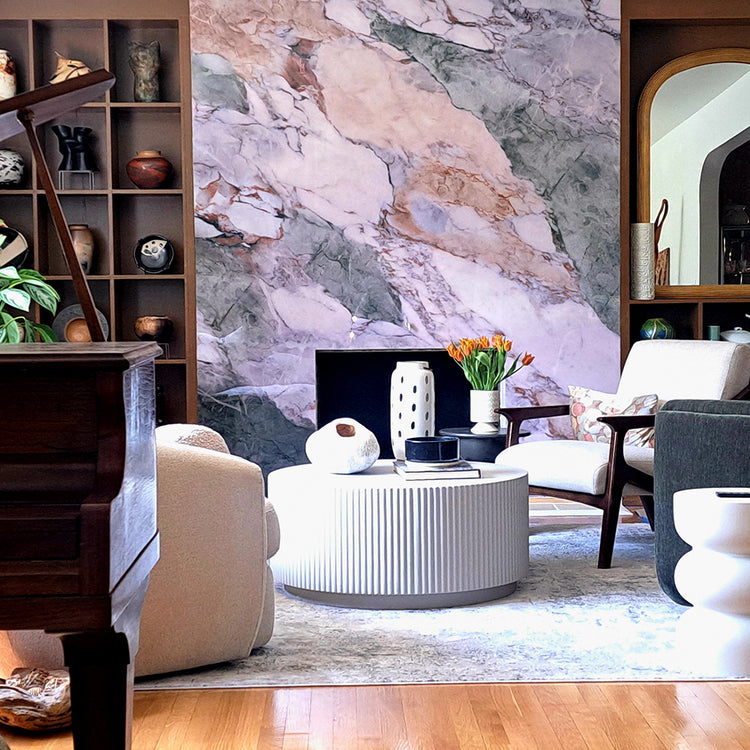

In contemporary interiors, the TV wall has evolved from a purely functional element into a central architectural feature. It is no longer just the backdrop for a screen, but a visual anchor that defines proportions, atmosphere, and material identity within the space. Marble look panels offer a compelling solution for TV wall units, combining the timeless elegance of stone with the flexibility required by modern living.
Unlike traditional cladding, marble look panels allow designers to treat the TV wall as a continuous surface, calm, sculptural, and intentional, rather than a collection of separate elements competing for attention.
Before continuing, many of you have asked about the cabinet composition shown in the image. To make this solution accessible and adaptable, we suggest two modular and versatile options for creating the sideboard base:
https://amzn.to/3MO1qip
https://amzn.to/49vi66U
If you would like guidance on how to complete and customise the composition, we invite you to explore also our guide:
https://arkdeko.com/products/feature-wall-design-workbook
The aesthetic advantage of marble look surfaces
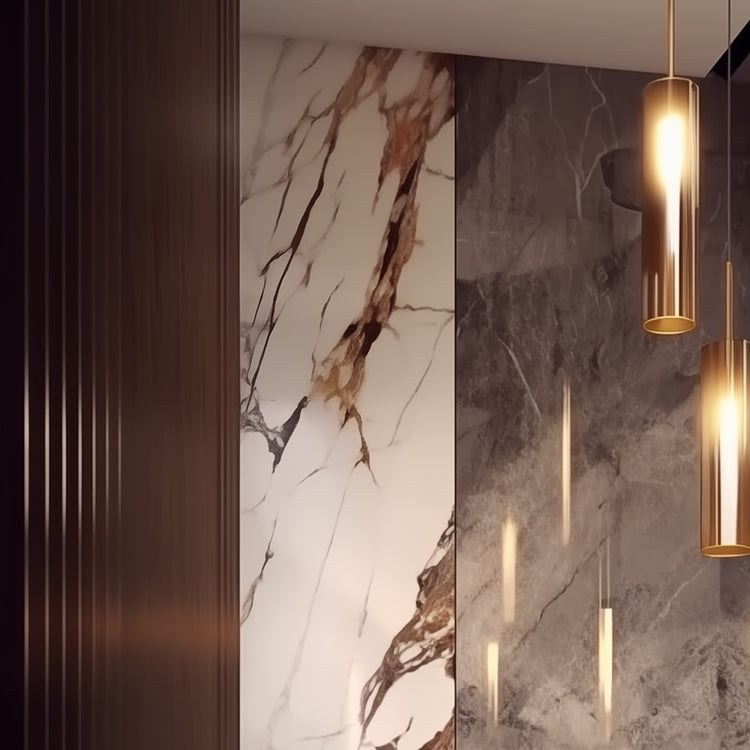
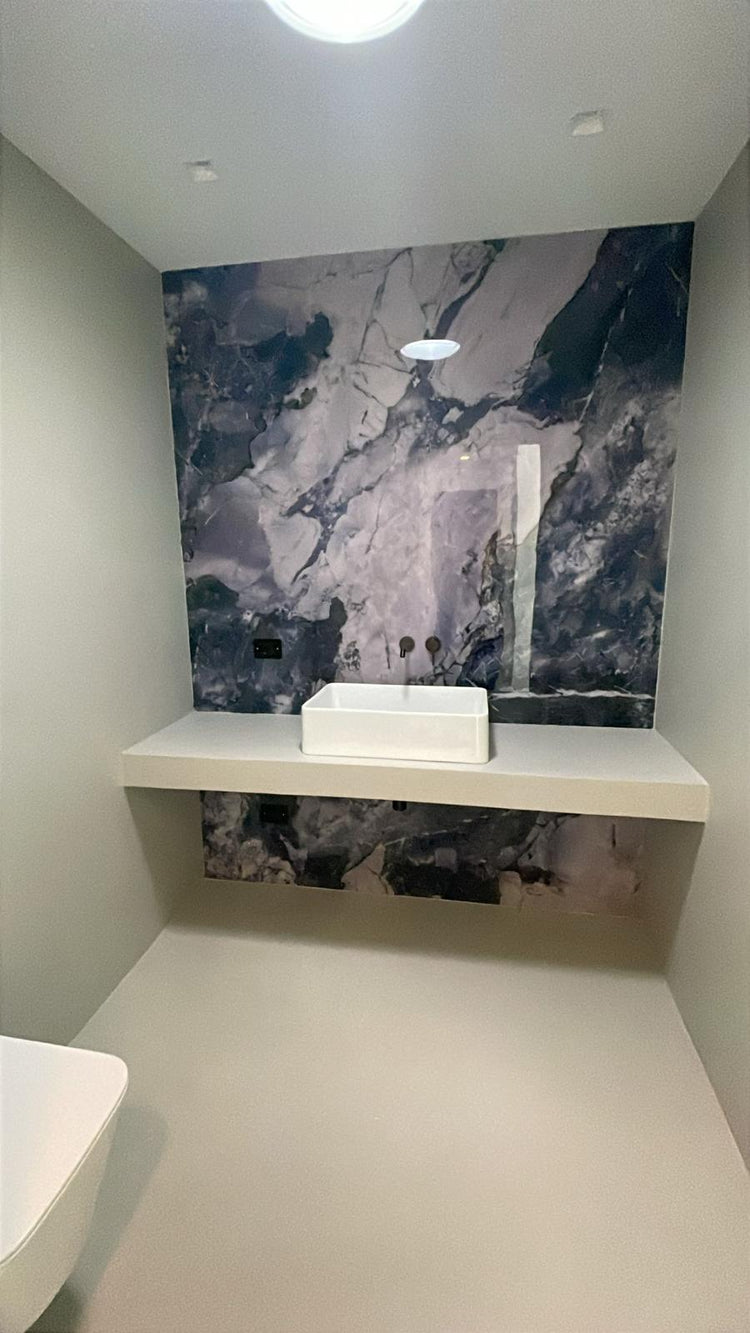
Marble has always carried a strong visual language: depth, movement, and natural rhythm. When translated into high-quality marble look panels, this language becomes more adaptable and precise. Veining can be aligned, book-matched, or softened depending on the desired effect, creating TV walls that feel composed rather than decorative.
For living rooms, this means the screen can visually “disappear” into the wall, framed by a material that adds character without overwhelming the space. Light-toned marbles bring clarity and brightness, while darker or dramatic patterns introduce contrast and a sense of intimacy, particularly effective in evening settings.
Designed around technology, not against it
A well-designed TV wall must accommodate cables, ventilation, sound systems, and often integrated storage. Marble look panels are especially suited to this task. Their lightweight structure allows for precise cut-outs, concealed access points, and seamless integration with cabinetry, shelves, or floating consoles.
The result is a clean, uninterrupted surface where technology is present but visually restrained. Panels can be installed as full-height walls, central slabs behind the TV, or as part of a larger composition including vertical trims, wood inserts, or metal accents.
Backlit and illuminated solutions
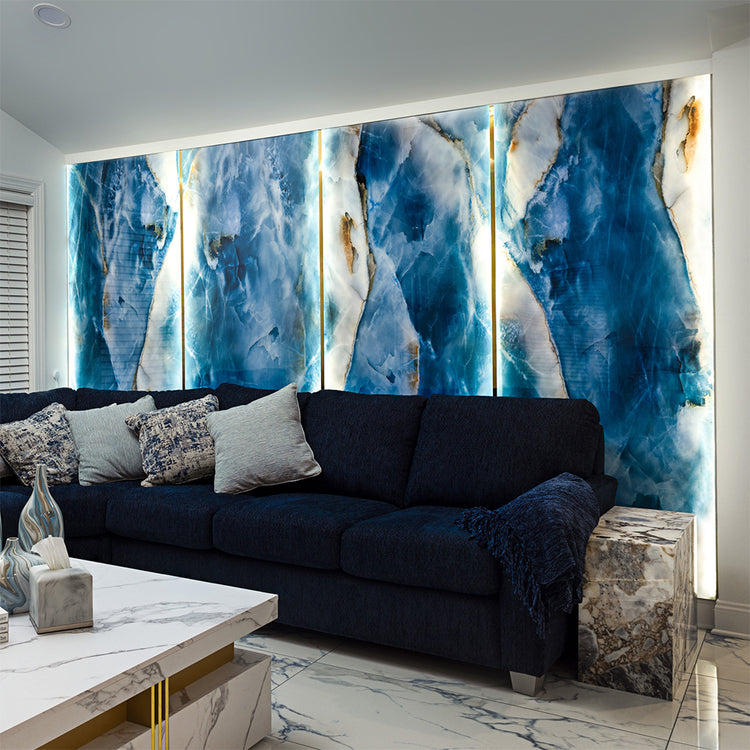
For those seeking a more expressive statement, translucent marble look panels with integrated backlighting elevate the TV wall into an atmospheric feature. Subtle illumination enhances the natural veining, creating depth and movement without glare or distraction.
This approach works particularly well in large living areas, luxury residences, or media rooms where the TV wall also functions as an accent wall. The light can be calibrated to remain soft and ambient, ensuring visual comfort while adding a layer of architectural drama.
Customisation as a design tool
Every TV wall has its own proportions, viewing angles, and spatial context. Marble look panels can be produced to measure, allowing complete freedom in layout and scale. From single-panel installations to multi-panel compositions with continuous veining, the surface adapts to the architecture rather than forcing standard solutions.
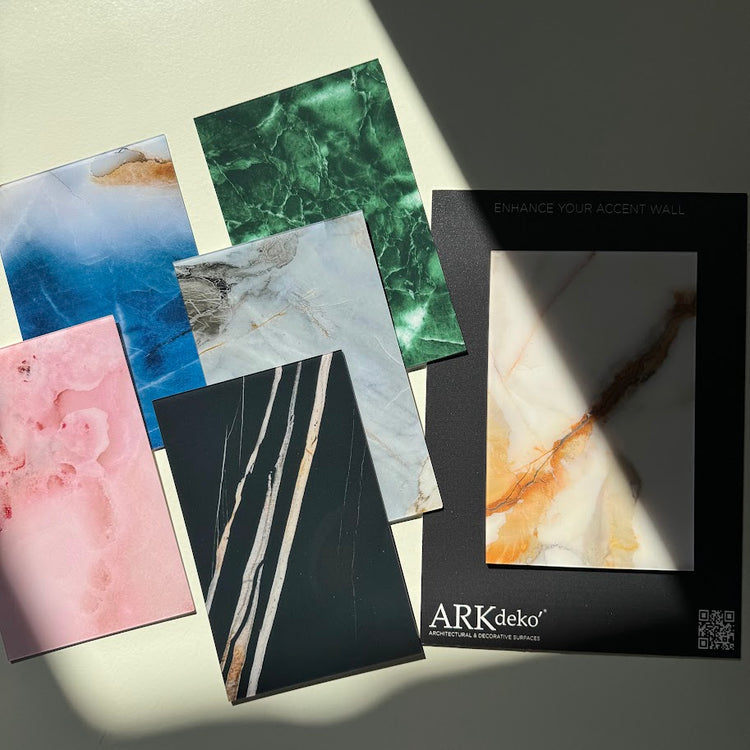
Finishes, tones, and patterns can be selected to complement flooring, furniture, or adjacent walls, ensuring coherence across the interior. Whether the goal is minimal elegance or a bold focal point, customisation transforms the TV wall into a deliberate design choice.
A refined alternative to traditional stone
Marble look panels offer the visual richness of natural stone while overcoming its limitations. They are easier to install, lighter on structures, and more adaptable to contemporary construction needs. Most importantly, they allow marble aesthetics to be used where traditional slabs would be impractical or overly dominant.
For TV wall units, this balance between presence and restraint is key. The wall becomes expressive without overpowering the room, an architectural surface that frames everyday life with quiet sophistication.